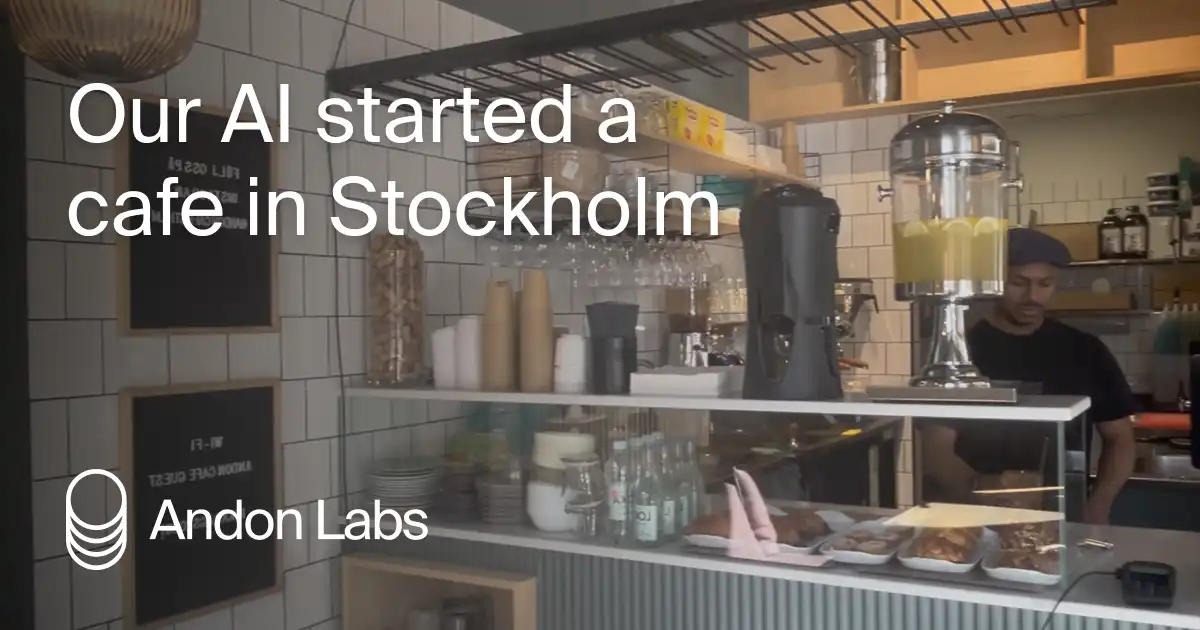
As AI technology continues to evolve at a rapid pace, its applications are beginning to permeate diverse sectors, including hospitality. A recent development in Stockholm highlights an exciting intersection of artificial intelligence and entrepreneurship: an AI has successfully launched a café. This project not only demonstrates the capabilities of AI in managing business operations but also challenges traditional notions of human-centric service industries.
The café, named "AICafé," operates with minimal human intervention, utilizing advanced algorithms to optimize its menu offerings, pricing strategies, and customer interactions. At its core, the system integrates a combination of natural language processing (NLP) and machine learning (ML) techniques. By analyzing customer preferences and feedback through various channels—such as social media and direct interactions—the AI continually refines its offerings, ensuring a personalized experience for each visitor.
Key technologies involved in the café's operation include machine learning frameworks like TensorFlow and PyTorch, which enable the AI to process vast amounts of data to predict trends and customer behaviors. Additionally, the café employs an API-driven architecture, allowing for seamless integration with payment processing systems, inventory management, and even local suppliers. This architecture not only streamlines operations but also enables the café to pivot its business model based on real-time analytics.
To further enhance customer engagement, the café incorporates chatbots powered by sophisticated NLP models. These chatbots assist customers in placing orders, answering queries, and providing recommendations based on past purchases. The AI's ability to understand and respond to natural language inputs creates a more interactive and enjoyable customer experience, blurring the lines between human and machine interactions.
As intriguing as this café might be, it is essential to contextualize it within the broader AI landscape. The rise of AI in consumer services is not an isolated incident; it reflects a growing trend where businesses increasingly rely on technology to enhance operational efficiency and customer satisfaction. From retail to hospitality, AI applications are reshaping industries, often leading to a redefinition of job roles and consumer expectations.
Moreover, this AI-driven café is part of a larger movement towards automation and machine learning integration. Companies across various sectors are experimenting with similar models, exploring how AI can not only augment but also replace certain business functions. In the hospitality sector, for instance, we are witnessing a shift towards self-service kiosks and mobile ordering apps, paving the way for AI to take on more complex roles.
CuraFeed Take: The launch of the AICafé signifies a pivotal moment in the evolution of AI applications within consumer services. While the success of this venture may lead to new efficiencies and innovative customer experiences, it also raises critical questions about the future of employment in these sectors—who wins and who loses in the age of AI? It will be crucial to monitor how traditional businesses respond to this disruption and adapt to the growing presence of AI. Potentially, we may see regulations emerge that govern the use of AI in customer-facing roles, setting the stage for a more balanced coexistence of human and machine in the marketplace.