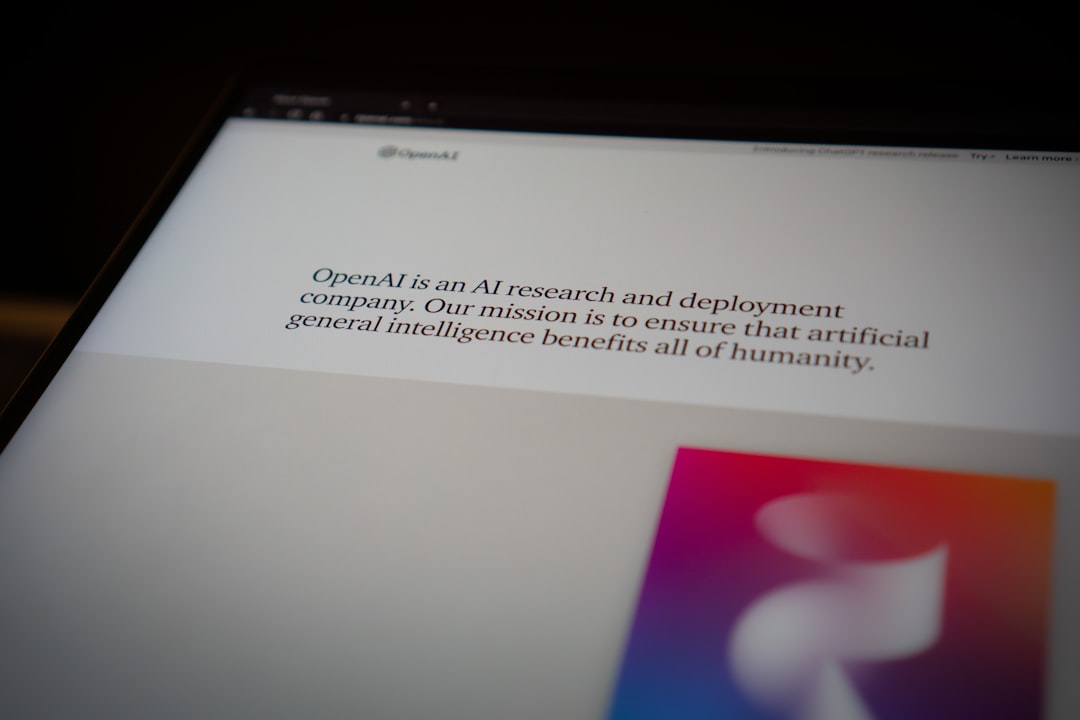
The artificial intelligence landscape is experiencing a critical inflection point where foundational model development intersects with business viability. OpenAI's leadership has recognized that without a coherent strategic framework, the gap between technical ambition and market execution widens dangerously. Altman's articulation of five guiding principles represents more than corporate positioning—it's a blueprint for how the company intends to navigate the complex engineering and ethical challenges ahead while justifying decisions that have drawn scrutiny from both competitors and open-source advocates.
For developers building on top of OpenAI's infrastructure, understanding these principles matters significantly. They signal which technical directions will receive investment, which APIs will be prioritized, and which partnerships will shape the platform's evolution. These aren't merely philosophical statements; they're commitments that affect deprecation timelines, model release schedules, and the long-term viability of applications built on OpenAI's services.
The five principles appear designed to address specific tensions within OpenAI's operational model. First, the framework emphasizes the importance of achieving advanced capabilities while maintaining safety guarantees—a technical challenge that directly impacts model architecture decisions, fine-tuning approaches, and the resource allocation between capability development and red-teaming. Second, principles around broad accessibility conflict with the need for monetization, suggesting OpenAI will continue offering both free tier access (via ChatGPT) and enterprise-grade APIs with varying cost structures. This dual-track approach mirrors successful infrastructure companies like AWS, where free tier adoption drives ecosystem growth while premium services fund development.
Third, the principles likely address OpenAI's transition from research organization to infrastructure provider. This shift requires different engineering disciplines—moving from academic publication cycles to API stability guarantees, versioning strategies, and backward compatibility considerations. Developers need confidence that the models they integrate today won't become deprecated without migration paths. Fourth, the framework presumably tackles the tension between competing with open-source models (like those from Meta and Mistral) while maintaining technical advantages. This requires continuous innovation in model efficiency, reasoning capabilities, and multimodal integration—areas where proprietary research investments can compound advantages.
Finally, the fifth principle likely addresses governance and alignment—how OpenAI positions itself relative to regulatory frameworks emerging globally. This affects API content moderation policies, data retention practices, and compliance requirements that developers must implement in production systems.
Within the broader AI infrastructure ecosystem, these principles position OpenAI as a platform company rather than a pure research organization. This distinction matters because platform companies must balance open participation with curated experiences. The principles essentially codify this balance: enabling broad developer access through APIs while maintaining proprietary advantages in model weights, training data, and inference optimization. This mirrors how successful platforms from Stripe to Twilio operate—they democratize access to complex infrastructure while extracting value through premium features and scale advantages.
The timing of articulating these principles is significant. As competition intensifies from both commercial players (Google, Anthropic, xAI) and open-source alternatives, OpenAI needs to communicate consistency to its developer ecosystem. Frequent pivots in strategic direction undermine confidence in platform stability. By explicitly stating principles, Altman is signaling that future decisions—even controversial ones—will flow logically from these commitments rather than appearing reactive or arbitrary.
CuraFeed Take: Altman's framework is strategically astute but reveals OpenAI's fundamental challenge: it's trying to be simultaneously a research leader, a platform company, and a responsible actor in AI governance. These roles have conflicting incentives. The "principles" announcement is savvy communication that reframes business decisions as principled commitments rather than opportunistic moves. However, developers should read between the lines. These principles will be invoked selectively—when they align with business interests and conveniently ignored when they don't. Watch specifically for how principles handle conflicts: if OpenAI must choose between safety and capability advancement, or between accessibility and monetization, which principle actually wins? The real test isn't whether these principles exist, but whether they constrain decision-making or merely provide post-hoc justification. For developers building on OpenAI's platform, the practical implication is clear: diversify your AI infrastructure dependencies. No single provider's principles should dictate your technical architecture. The companies winning in AI infrastructure long-term will be those that remained agnostic to any single vendor's strategic narrative.