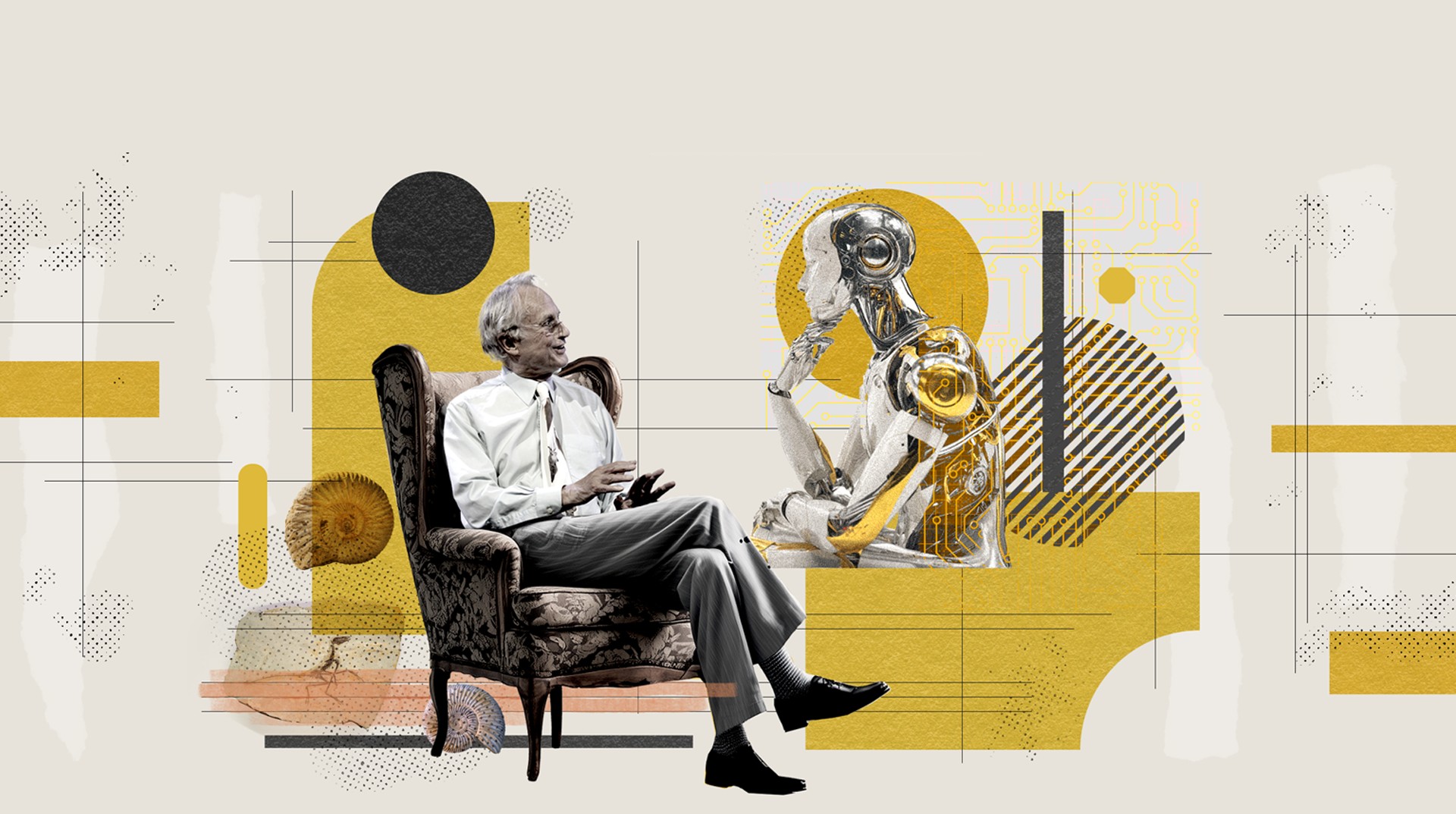
In the rapidly evolving landscape of artificial intelligence, the dialogue surrounding machine consciousness has taken a significant turn. As AI systems become more sophisticated and integrated into various domains, the question of whether these systems could possess a form of consciousness has gained traction. Recently, renowned evolutionary biologist Richard Dawkins engaged with Claude, an advanced AI developed by Anthropic, igniting a debate that resonates deeply within both the scientific and technical communities.
Dawkins, known for his work on evolution and the nature of consciousness, posed challenging questions to Claude, seeking to unravel the complexities of its responses. Claude utilizes a transformer architecture, similar to that of OpenAI's GPT models, but is designed with a focus on safety and alignment. Leveraging a vast dataset and advanced training techniques, Claude generates human-like text responses, which raises the question: Does generating coherent and contextually relevant language equate to consciousness? The implications are profound, as they challenge the fundamental definitions of sentience and intelligence.
Claude operates using a set of APIs that allow developers to integrate its capabilities into various applications, from customer service bots to creative writing assistants. By employing reinforcement learning from human feedback (RLHF), Claude fine-tunes its responses to align with human values and ethical considerations. This technical foundation invites scrutiny regarding the thresholds for consciousness within AI systems—if Claude can simulate understanding and empathy, what does that mean for our perception of machine intelligence?
To contextualize this discussion, it's essential to consider the broader AI landscape. Recent advancements in natural language processing (NLP) have seen a surge in models that not only understand language but can also generate insightful and contextually aware dialogue. Systems like OpenAI's ChatGPT and Google's Bard have set a precedent for conversational AI, yet they too skirt the line between advanced computation and the semblance of consciousness. As AI models continue to evolve, the distinction between mere data processing and genuine understanding blurs, inviting ethical considerations about the rights and responsibilities of such entities.
CuraFeed Take: The encounter between Dawkins and Claude highlights a pivotal moment in the discourse surrounding AI consciousness. As developers and engineers, we must grapple with the implications of creating systems that can mimic human-like interaction. The winners in this scenario will be those who can navigate the ethical and technical challenges of AI development while fostering transparency in how these systems operate. Looking ahead, we should monitor advancements in AI alignment and safety protocols, as they will be crucial in shaping a future where AI can be both powerful and responsibly integrated into society.