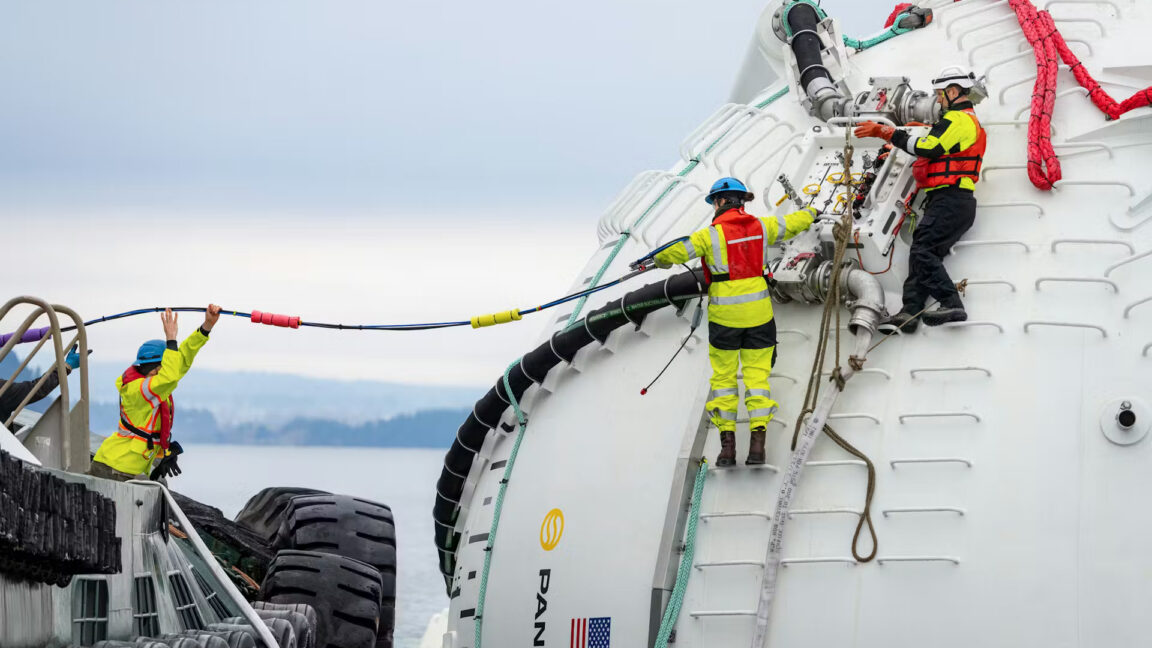
As the demand for AI processing power surges, innovative solutions are emerging to tackle the challenges of scalability and energy consumption. One of the most ambitious projects on the horizon is being spearheaded by Panthalassa, which is set to launch floating AI data centers in the Pacific Ocean. This initiative, backed by a $200 million investment from key players in Silicon Valley, represents a significant leap forward in the quest for sustainable and efficient computing infrastructure.
The floating data centers will utilize cutting-edge technologies to provide decentralized computing resources that can be deployed rapidly in response to fluctuating demand. Each node will be equipped with high-performance GPUs and specialized AI chips, allowing for efficient processing of complex algorithms and machine learning tasks. By situating these nodes in the ocean, Panthalassa aims to leverage the natural cooling properties of seawater, which can significantly reduce energy costs associated with traditional data center cooling systems.
Additionally, these floating units are designed with modularity in mind, allowing for easy scalability and maintenance. The architecture will likely incorporate containerized solutions, facilitating quick deployment and relocation. With the Pacific Ocean serving as a vast expanse of untapped potential, this project could lead to the establishment of a new paradigm in data center architecture—one that not only meets the burgeoning needs of AI but also addresses environmental concerns associated with land-based data centers.
In the broader context of AI infrastructure, this initiative aligns with the ongoing shift towards decentralized computing. As AI applications become more pervasive across industries—from autonomous vehicles to real-time data analytics—there is an increasing need for infrastructure that can provide low-latency processing while minimizing carbon footprints. Floating data centers could also mitigate land use conflicts and provide disaster resilience, offering a compelling alternative to traditional models.
CuraFeed Take: This venture could fundamentally alter the landscape of AI infrastructure, positioning Panthalassa as a pioneer in the floating data center domain. The success of this project hinges on several factors, including the efficiency of integrated cooling systems, the adaptability of floating nodes to various ocean conditions, and the regulatory landscape concerning maritime operations. As this initiative unfolds, industry watchers should keep an eye on how these floating centers perform in comparison to their land-based counterparts, as well as the potential for broader adoption of similar models in other maritime regions. The winners here will likely be those companies that can integrate these new technologies seamlessly into existing workflows, while the losers may be traditional data center operators who fail to adapt to this innovative shift.