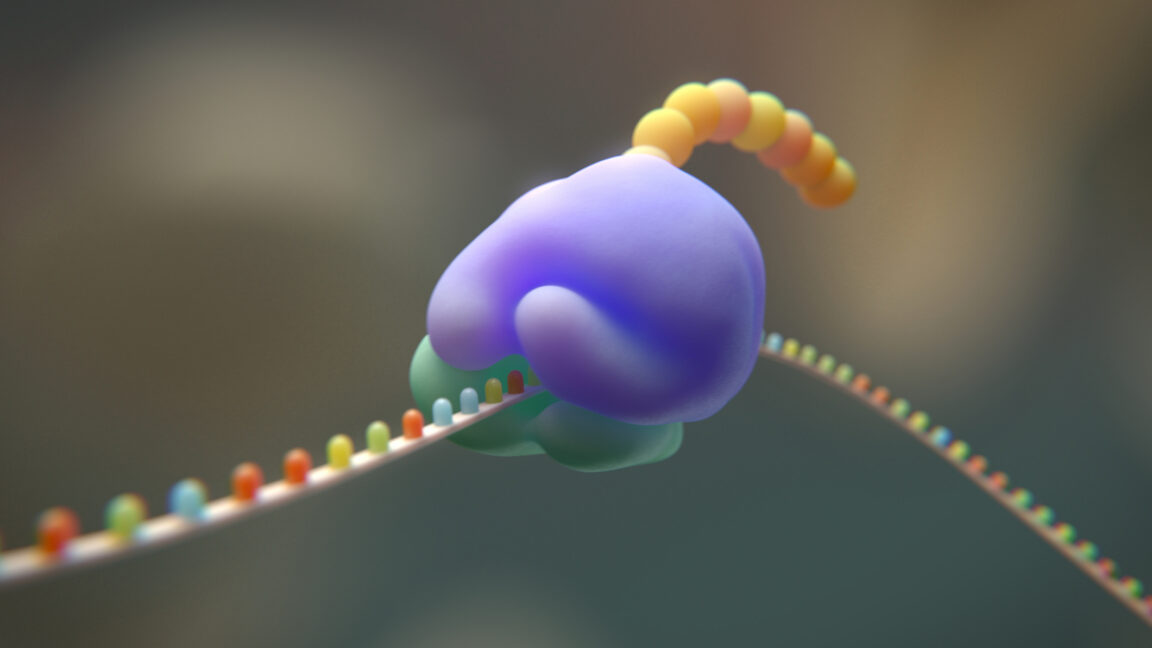
The intersection of artificial intelligence and genetic engineering is rapidly evolving, capturing the attention of researchers and developers alike. In a recent study, a team of scientists leveraged advanced AI tools to manipulate the ribosomal machinery of organisms, aiming to streamline the genetic code by reducing the number of standard amino acids from 20 to just 19. This milestone not only paves the way for more efficient protein synthesis but also opens up intriguing possibilities for synthetic biology applications.
The research team, led by prominent geneticists, utilized AI-driven models to analyze and optimize ribosomal function. By reprogramming the ribosome, the team demonstrated that it was possible to functionally replace one of the canonical amino acids with a non-standard counterpart without compromising the protein synthesis process. This novel approach involved a detailed examination of codon-anticodon interactions and the structural dynamics of ribosomal RNA (rRNA), which are crucial for accurately decoding mRNA sequences during translation.
One of the key technical advancements in this study was the use of machine learning algorithms to predict the structural impacts of removing an amino acid from the genetic code. By training on vast datasets of known protein structures and their corresponding genetic sequences, the AI system was able to identify which amino acid could be eliminated while maintaining overall protein functionality. This predictive capability represents a significant leap in our ability to manipulate biological systems at the molecular level, making it an exciting time for developers and engineers in the field of AI-enhanced biotechnology.
This research fits into a broader context where the integration of AI and genetic engineering is becoming increasingly prevalent. The ability to modify the genetic code holds enormous potential for various applications, from creating novel enzymes for industrial processes to designing therapeutic proteins that can target specific diseases. As the boundaries of what is possible with genetic modification continue to expand, this study serves as a crucial stepping stone toward more complex and bespoke biological systems.
CuraFeed Take: The implications of reducing the genetic code to 19 amino acids are profound, signaling a shift in how we approach protein engineering and synthetic biology. By simplifying the genetic framework, researchers can create more efficient and versatile organisms that could outperform their natural counterparts. As we look ahead, expect a surge of interest in the development of tailored proteins and biomolecules, while researchers and developers should prepare for the ethical considerations and regulatory challenges that accompany such groundbreaking advancements. Monitoring the evolution of AI tools in this space will be critical to understanding how these technologies will shape the next generation of biotechnological innovations.